The Congolese Diaspora Mobilizes Around Artificial Intelligence at a First-of-Its-Kind CDMA Session
First public Think Tank session dedicated to AI and its implications for the diaspora and the DRC
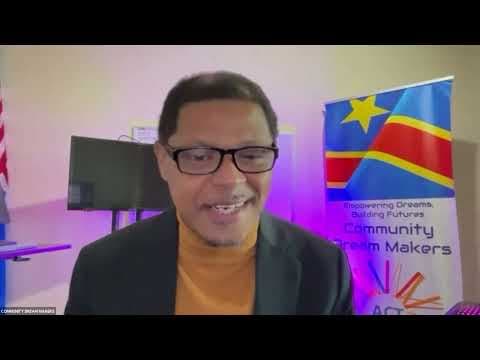
AI and the Congolese Diaspora — CDMA Think Tank, August 29, 2026
Watch on YouTubeDALLAS — August 29, 2026 — The Community Dream Makers Act (CDMA) Think Tank held its first public session dedicated to artificial intelligence (AI) and its implications for the Congolese diaspora and the Democratic Republic of Congo. The meeting, organized on Zoom and followed by 59 registrants, brought together several speakers, including Dr. Muswamba, Angel Mukadi and Yves Mukanya.
For 90 minutes, participants shared their personal experiences with AI in healthcare, education, marketing, writing and administration. They highlighted the major obstacles to its adoption: lack of digital literacy, low trust in technological tools, limited access to infrastructure, and the persistent influence of cultural or religious factors. Some recalled that, for part of the population in the DRC, technology is still perceived as a "diabolical machination."
The exchanges also shed light on the concrete opportunities AI could offer the country: improved medical diagnosis, support for education, agricultural optimization, stronger security, and modernized electricity management. Several speakers insisted on the need for guidance, appropriate training, and systematic verification of information generated by AI tools.
In closing, Angel Mukadi announced the launch of a free training program made up of 16 hands-on sessions, designed to democratize the use of AI within the Congolese community. This cycle aims to give participants the skills they need to use AI autonomously and responsibly.
AI Series — 16 hands-on sessions
Discover the free training program announced at the session: 16 practical sessions to learn to use AI autonomously and responsibly.
With this first session, CDMA lays the foundation for a structured movement of learning and innovation, inviting the diaspora to move from the role of spectator to that of actor in the ongoing digital transformation.